


Takamachi-goe Course
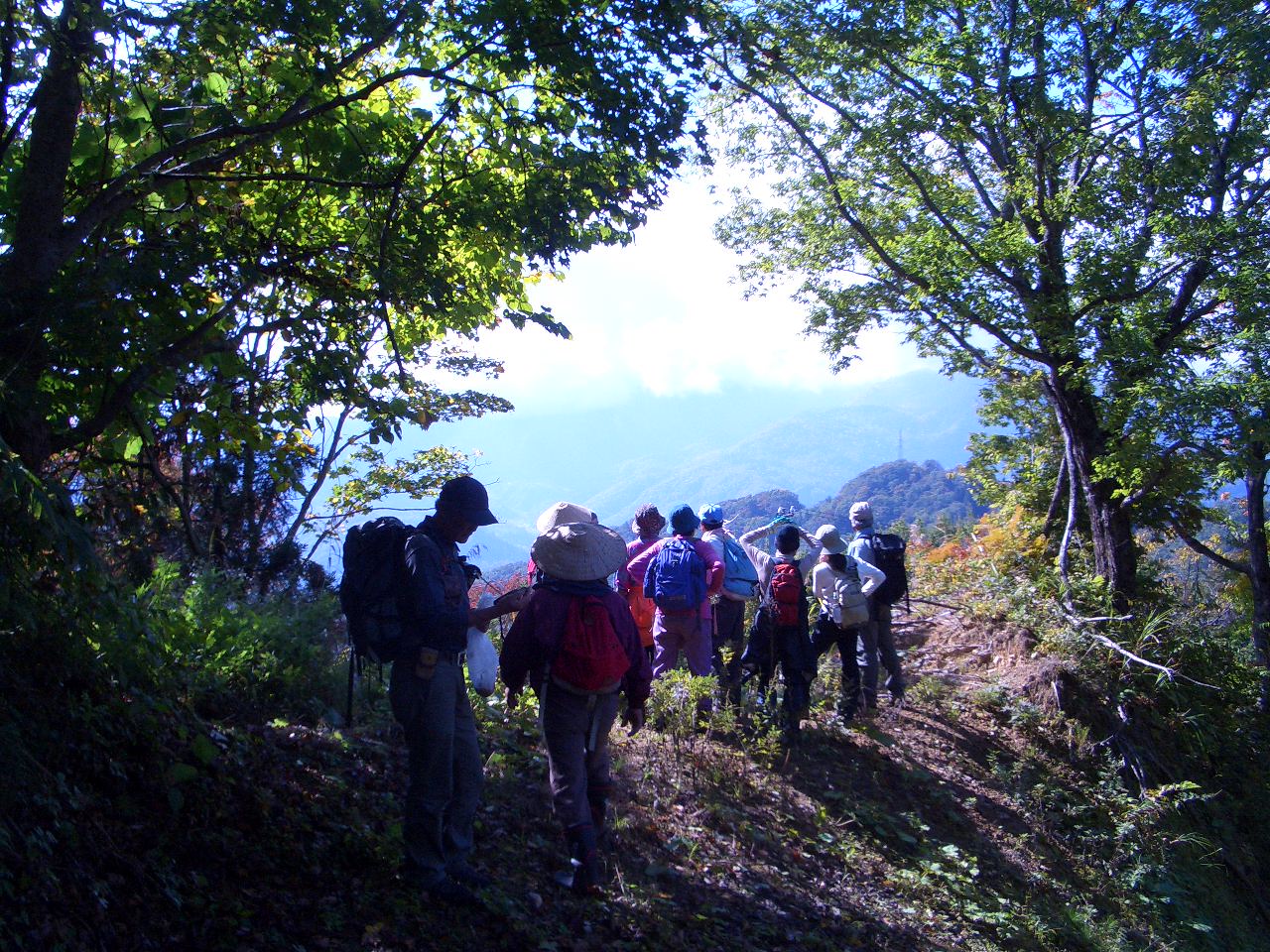
●Difficulty: Intermediate
●Walking Period: May to first snowfall
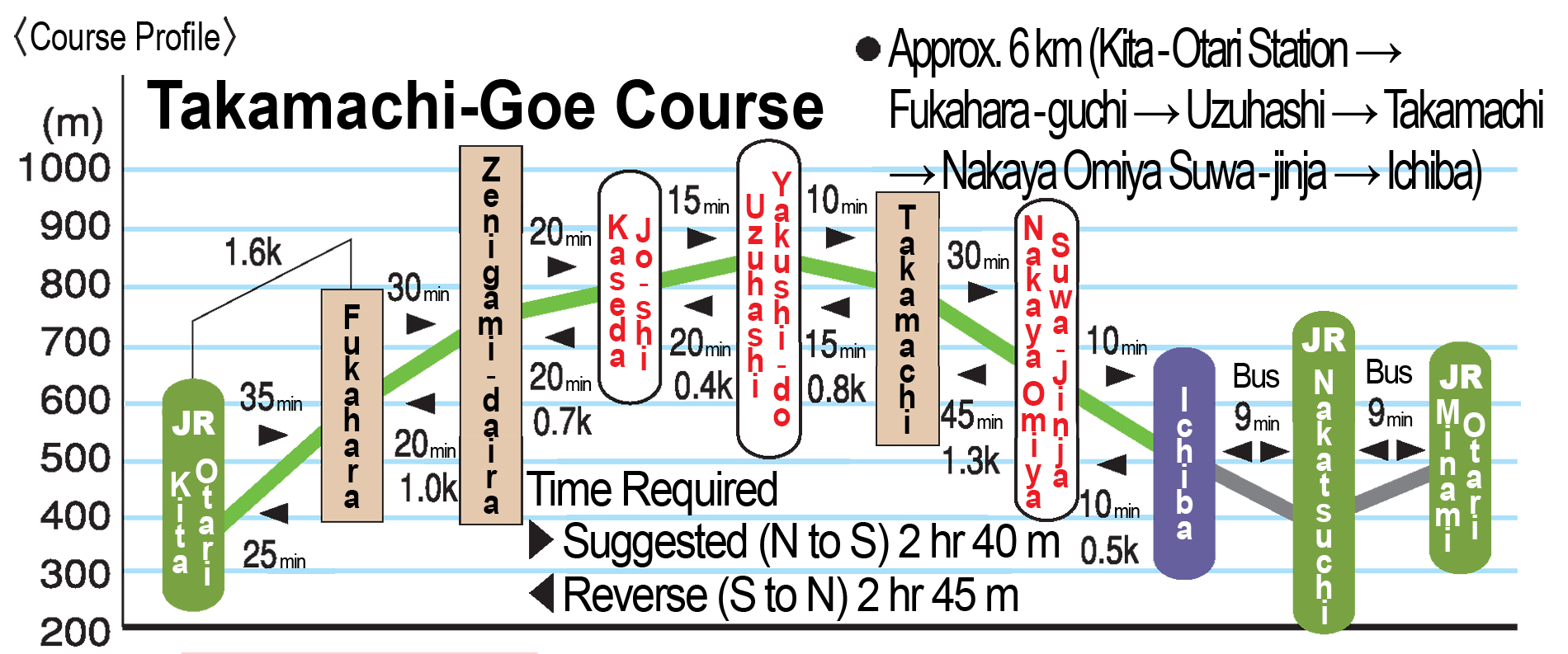
●Total Length: Approximately 6 km (Kita-Otari Station → Fukahara-guchi → Uzuhashi → Takamachi → Nakaya Omiya Suwa-jinja → Ichiba)
●Time Required: About 2 hours 45 minutes from south to north / About 2 hours 40 minutes from north to south
Highlights
●Recharge with spiritual energy on the grounds of the Nakaya Suwa Shrine
●Absorb the fantastic scenic views from the climb up towards Uzuhashi
●Bathe in the sounds of songbirds and search for signs of wildlife in the quiet forest
●Imagine trains of oxen walking the broad path descending towards the Fukahara settlement
Please see the Japanese page for the course map.
The Takamachi-Goe Course retains much of the look, feel, and charm of the old Salt Road. It was also the route traveled for centuries by processions of priests from the Suwa Grand Shrine on their way to conduct a sacred ritual every seven years. The trail starts out in a lovely settlement nestled in a narrow valley, climbs up through cedar and deciduous forest, and eventually reveals expansive views of the Northern Alps at its apex before descending through an even more pleasant forest and another idyllic mountainside community. The natural surroundings and lack of visitors often lead to sightings of wildlife such as copper pheasants, kamoshika (Japanese Serow), and more. The trail is dotted with ancient statues, photo spots, and points of interest. The Uzuhashi area, at around the midpoint of the walk, is a lovely place to sit down, drink natural spring water, and refresh before continuing on.
Elevation Profile
Access
By Car
Parking is available at the northern end of the course using the parking lot for Kita-Otari Station, while the Harumachi-tei Park parking lot can be used at the southern end.
By Train
t takes about 35 minutes on foot to reach Fukahara-guchi, the northern starting point of the walk, from Kita-Otari Station. Alternatively, local buses connect Nakatsuchi Kyoku-mae (Ichiba), at the southern end of the walk, to Minami-Otari and Nakatsuchi stations.
Historical Landmarks & Points of Interest
-
Zenigami-daira
This area is called Zenigami-daira, which alludes to a legend that says local feudal lords once hid a stash of coins here. Further along, you’ll find old stone statues of Dainichi Nyorai and Bato Kannon, which were erected to memorialize fallen oxen and horses (respectively) that worked on or near the trail. 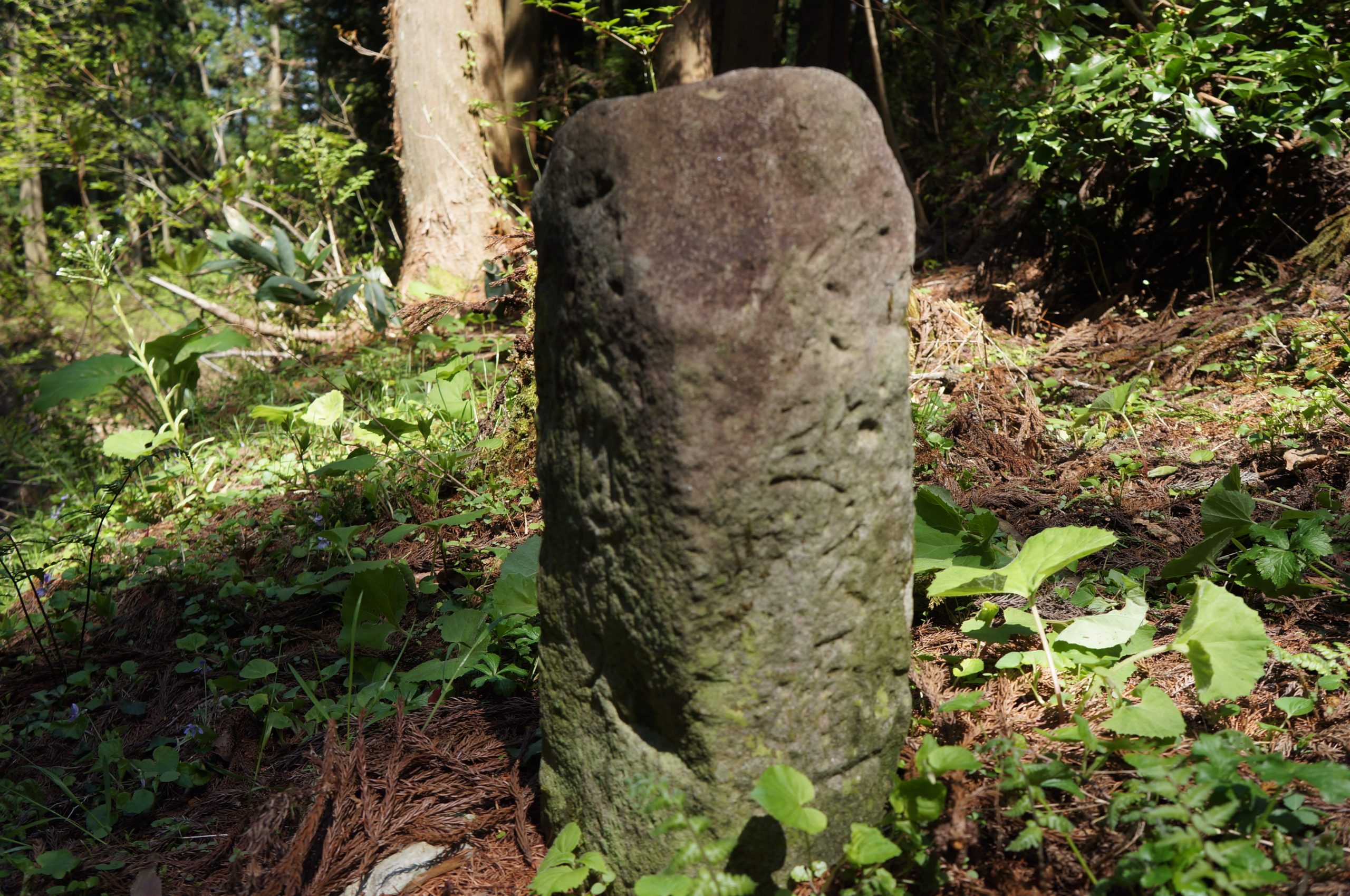
-
Uzuhashi Yakushi-do
This small building is dedicated to Yakushi Nyorai, the buddha of healing and medicine, and the statue housed within is believed to be especially effective for treating eye ailments. 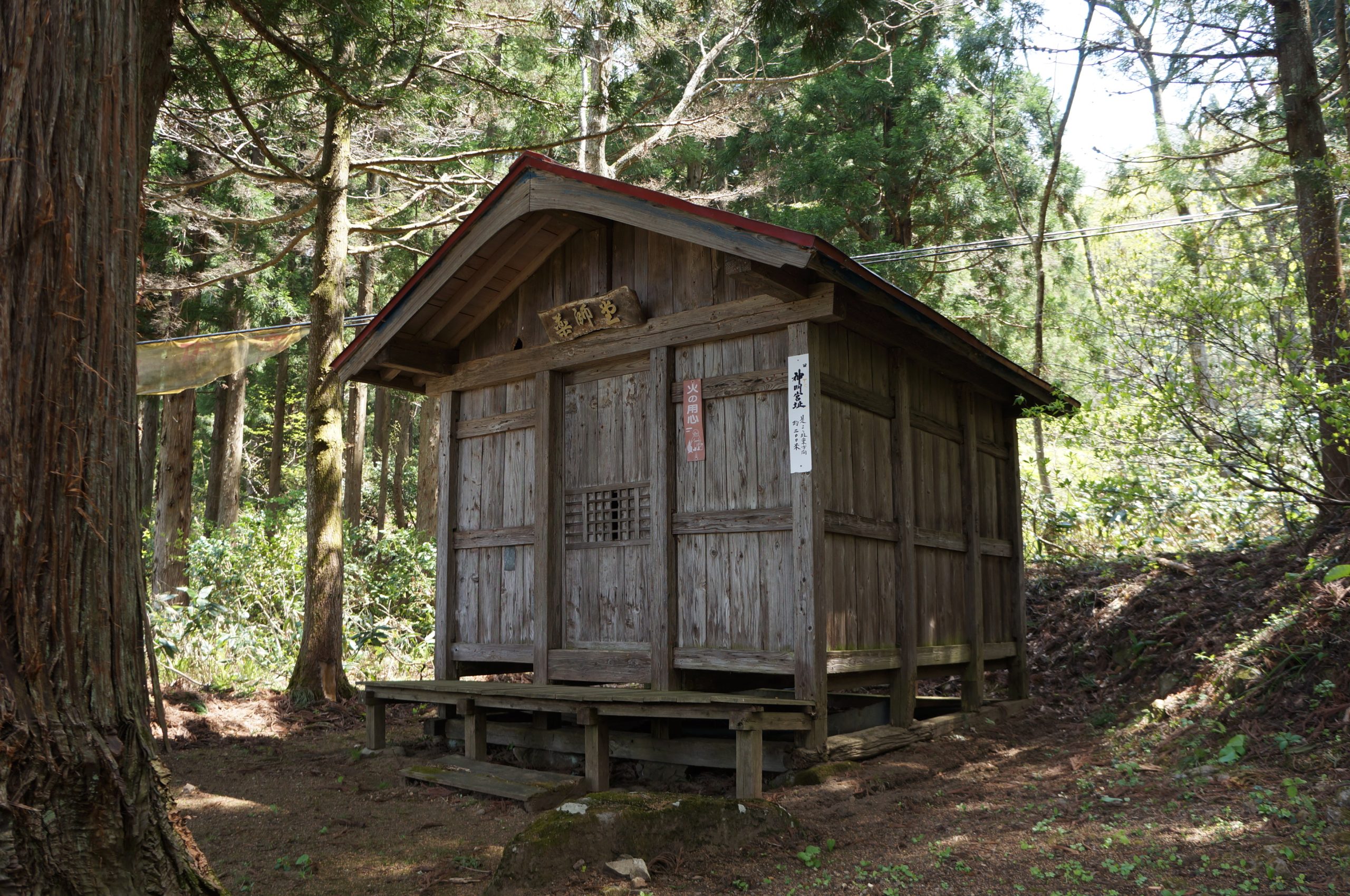
-
Nakaya Omiya Suwa-jinja
(Designated as an Important Cultural Asset by both Otari Village & Nagano Prefecture)
-
Hirakura Jo-shi
This is the site of the remains of an important pre-Edo period mountain castle known as Hirakura-jo. Here Iimori Moriharu, who was aligned with Echigo’s Uesugi Kenshin, made his last stand against the invading forces of Takeda Shingen, Uesugi’s bitter enemy. Despite having requested reinforcements from the Uesugi clan, they arrived too late, and the castle fell in 1557.
-
Gyokusen-ji
Iimori Moriharu, who was killed in battle while defending Hirakura Castle against Takeda Shingen’s forces in 1557, is buried on the grounds of this temple.