


Omine Toge-goe Course
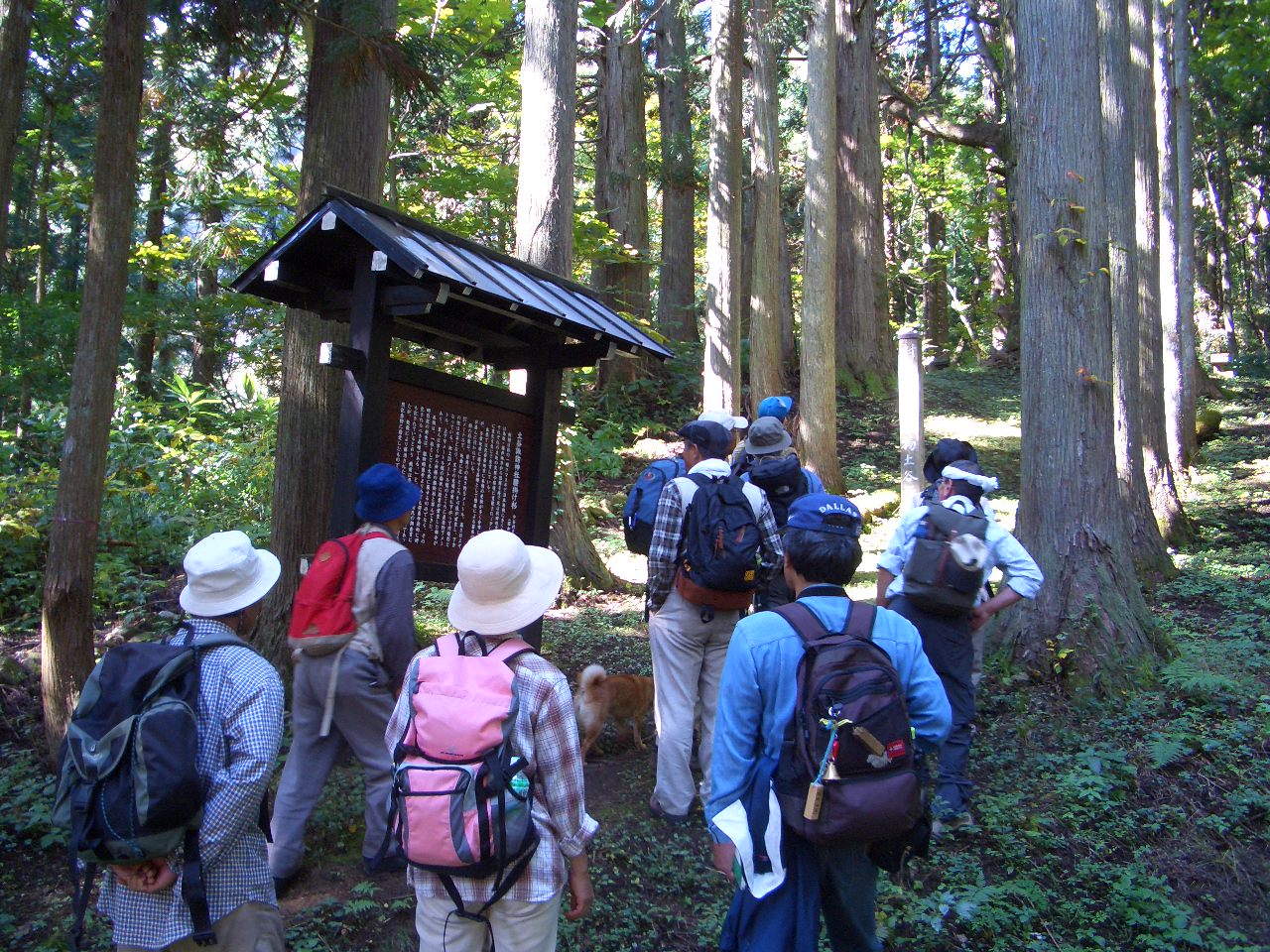
●Difficulty: Family-friendly
●Walking Period: May to first snowfall
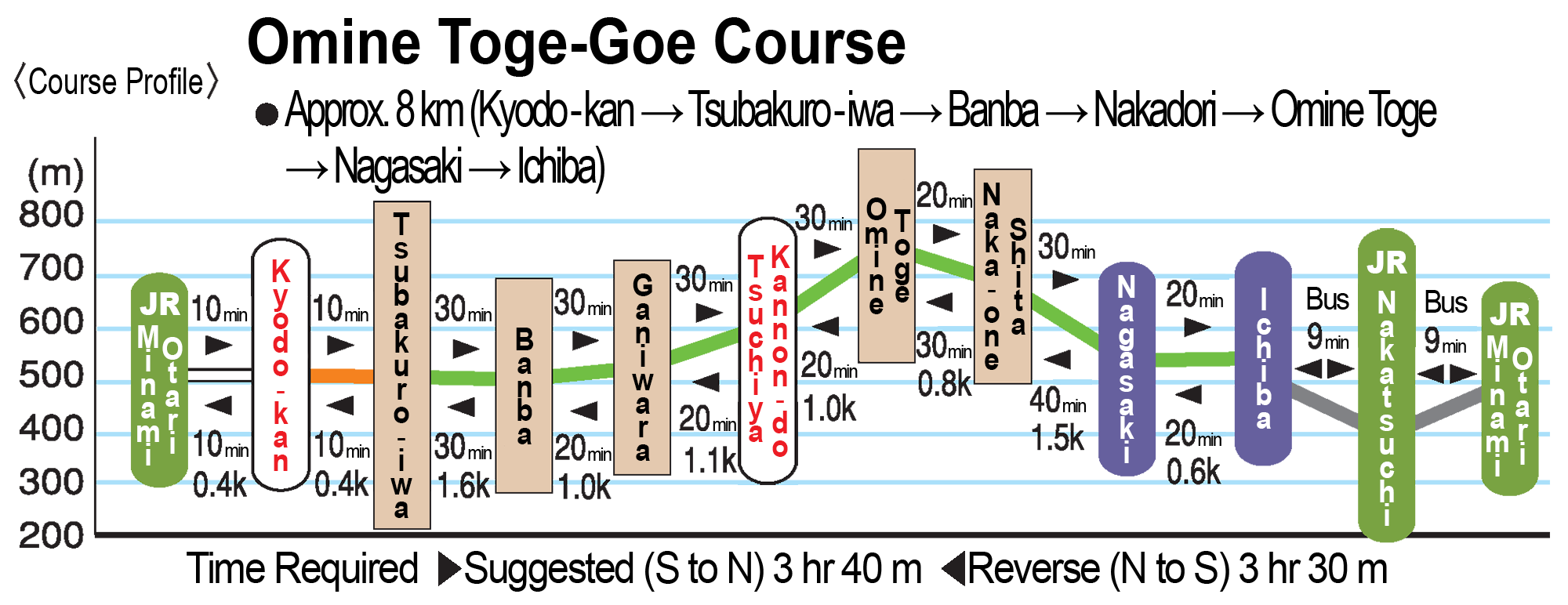
●Total Length: Approximately 8 km (Kyodo-kan → Tsubakuro-iwa → Banba → Nakadori → Omine Toge → Nagasaki → Ichiba)
●Time Required: About 3 hours 40 minutes from south to north / About 3 hours 30 minutes from north to south
Highlights
●Walk through the terraced rice fields below Ganiwara
●Stroll the quiet streets of the Tsuchiya valley and enjoy fantastic views of the Northern Alps
●Travel the moss-covered, old stone stairs leading to the Tsuchiya Shrine
●Take in amazing views of the settlements strewn across the hillside of the Nakaya valley
The Omine Toge-Goe Course is the gateway to the old Chikuni Kodo. As both the easiest to access and the least remote of the Kodo’s four total routes, it is an excellent place to start journeying on the less-visited side of the Shionomichi. The route follows the western bank of the Himekawa River, and travels a comparatively high percentage of paved roads, though the vast majority are quiet streets through pleasant settlements with little to no car traffic and wonderful views of the mountains and valleys in all directions. This path played an important part in a ritual procession conducted every seven years by priests from the Suwa Grand Shrine, and there are smaller shrines and stone monuments along the way that still attest to its important religious role.
Elevation Profile
Access
By Car
Parking is available at the southern end of the course using the parking lot for the Otari-mura Yakuba (Otari Village Hall),while the Harumachi-tei Park parking lot can be used at the northern end.
By Train
It takes about 20 minutes on foot to reach the Tsubakuro-iwa rock and Miyamoto Bridge, which mark the southern starting point of the walk, from Minami-Otari Station. Alternatively, local buses connect Ichiba, at the northern end of the walk, to Minami-Otari and Nakatsuchi stations.
Historical Landmarks & Points of Interest
-
Miyamoto Suwa-jinja
-
Hakusan-sha no Osugi
(Designated as an Important Cultural Asset by Nagano Prefecture) 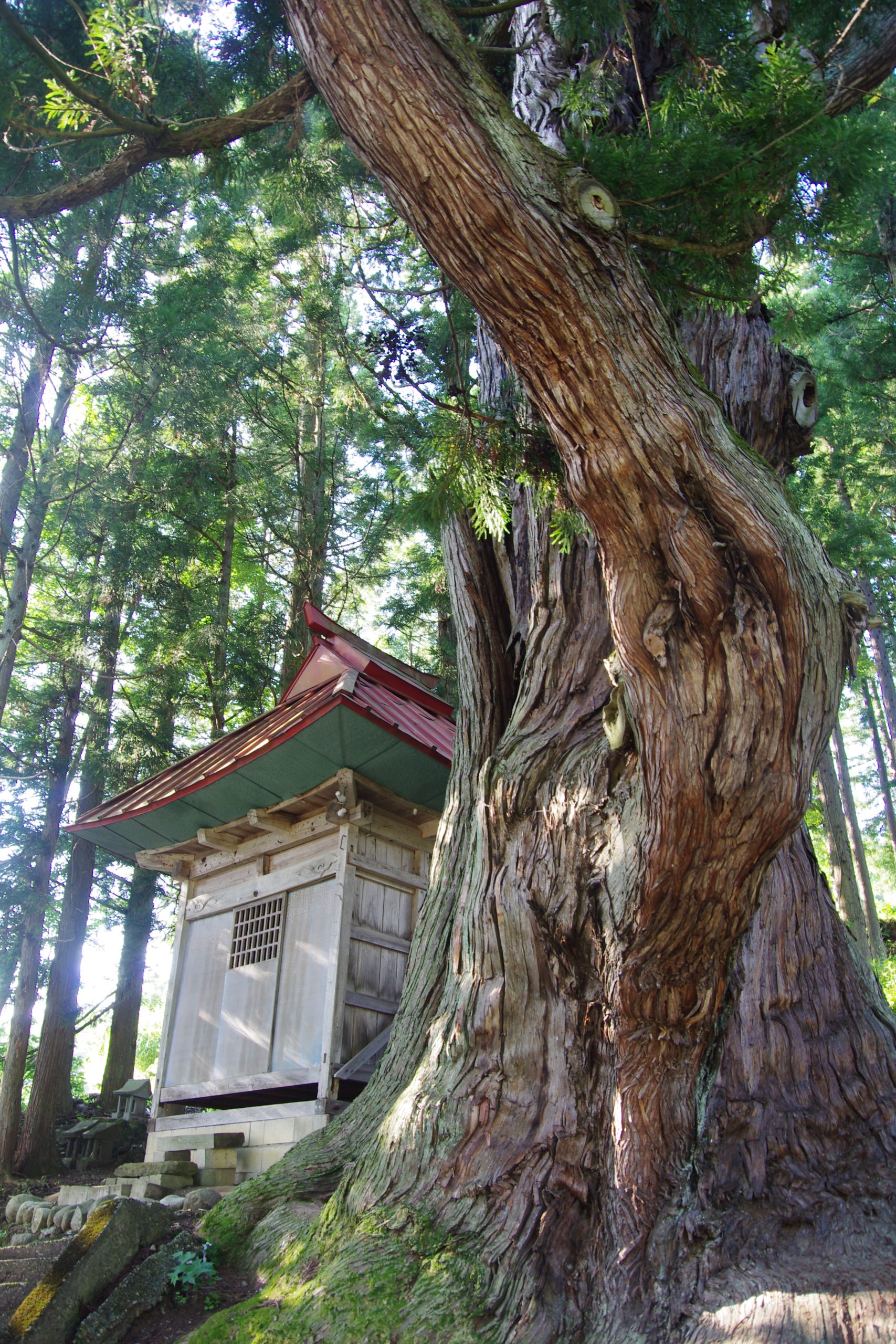
-
Tsuchiya Kannon-do
-
Tsuchiya Suwa-jinja
-
Koshikake-sugi
(Designated as an Important Cultural Asset by Nagano Prefecture)
-
Hirakura Jo-shi
This is the site of the remains of an important pre-Edo period mountain castle known as Hirakura-jo. Here Iimori Moriharu, who was aligned with Echigo’s Uesugi Kenshin, made his last stand against the invading forces of Takeda Shingen, Uesugi’s bitter enemy. Despite having requested reinforcements from the Uesugi clan, they arrived too late, and the castle fell in 1557.
-
Gyokusen-ji
Iimori Moriharu, who was killed in battle while defending Hirakura Castle against Takeda Shingen’s forces in 1557, is buried on the grounds of this temple.