


Oami Toge-goe Course
●Difficulty: Advanced, suitable for strong walkers
●Walking Period: June to first snowfall
●Total Length: Approximately 10 km (Oami Suwa-jinja → Yokokawa-no-Tsuribashi → Oami Toge → Shiro-ike → Yamaguchi)
●Time Required: About 5 hours 10 minutes from south to north / About 5 hours 10 minutes from north to south
Highlights
●Enjoy the idyllic Oami settlement and views of Mt. Amakazari
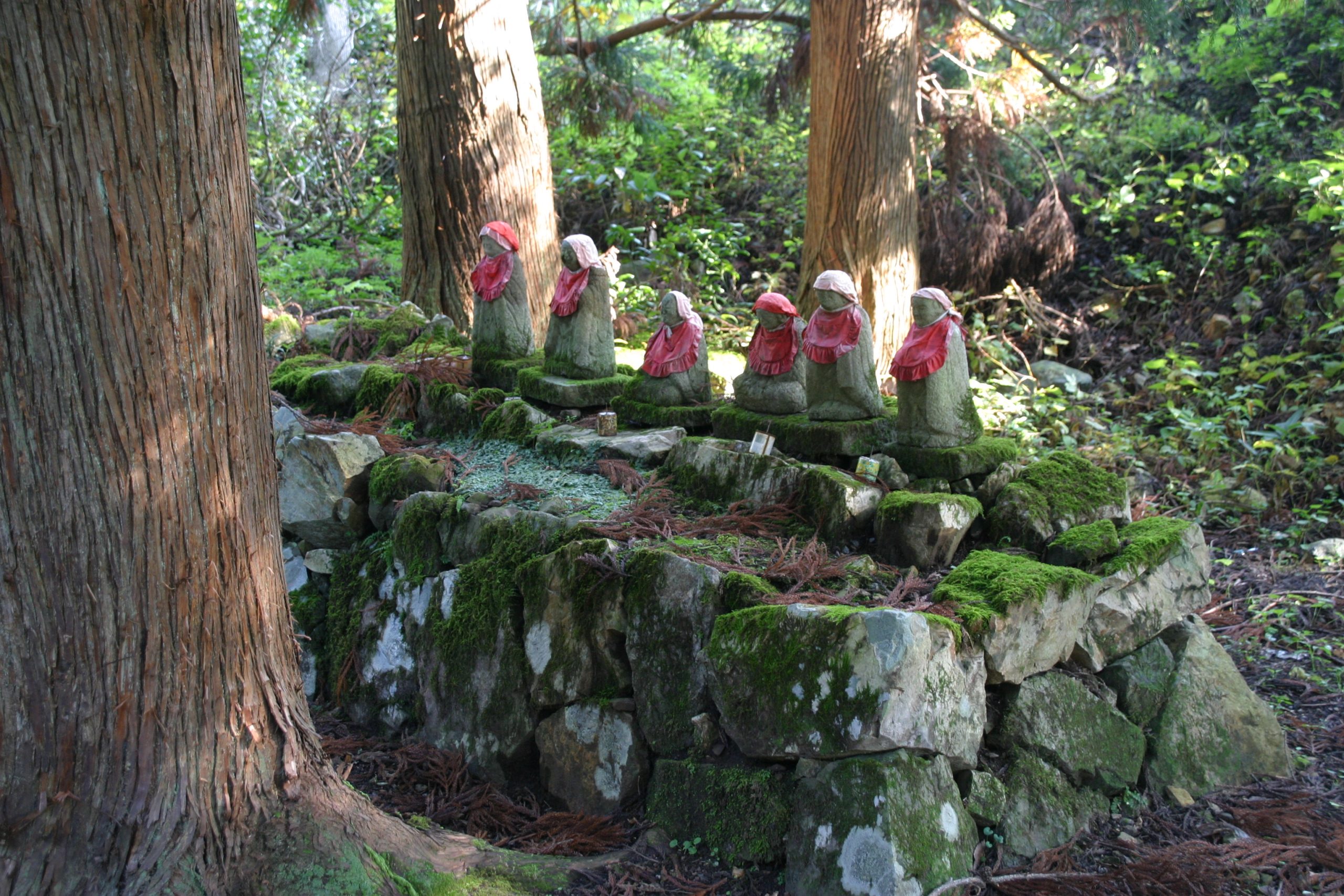
●Observe the peaceful expressions on the faces of Oami’s Roku Jizo
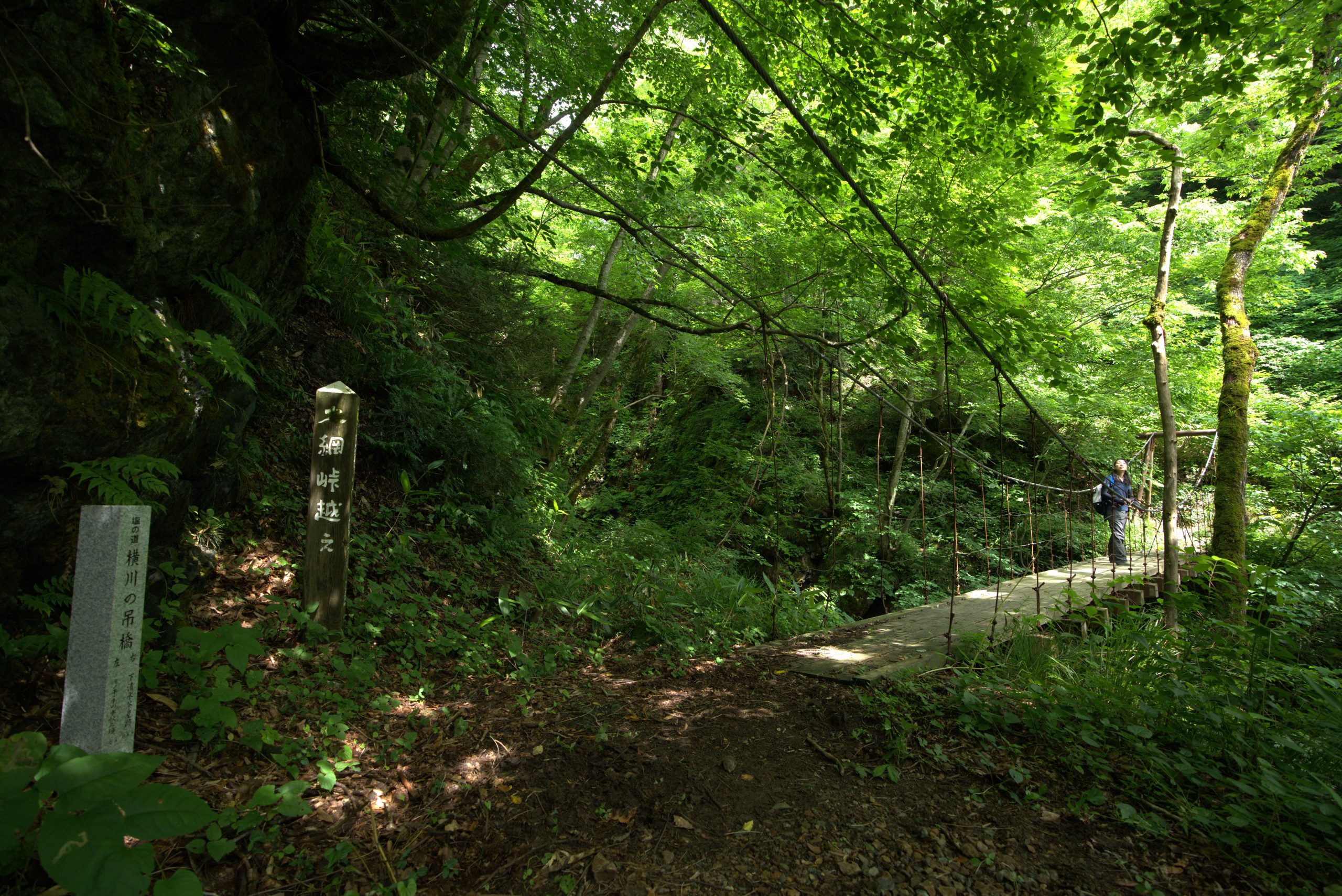
●Cross the suspension bridge above the clear waters of the Yokokawa river
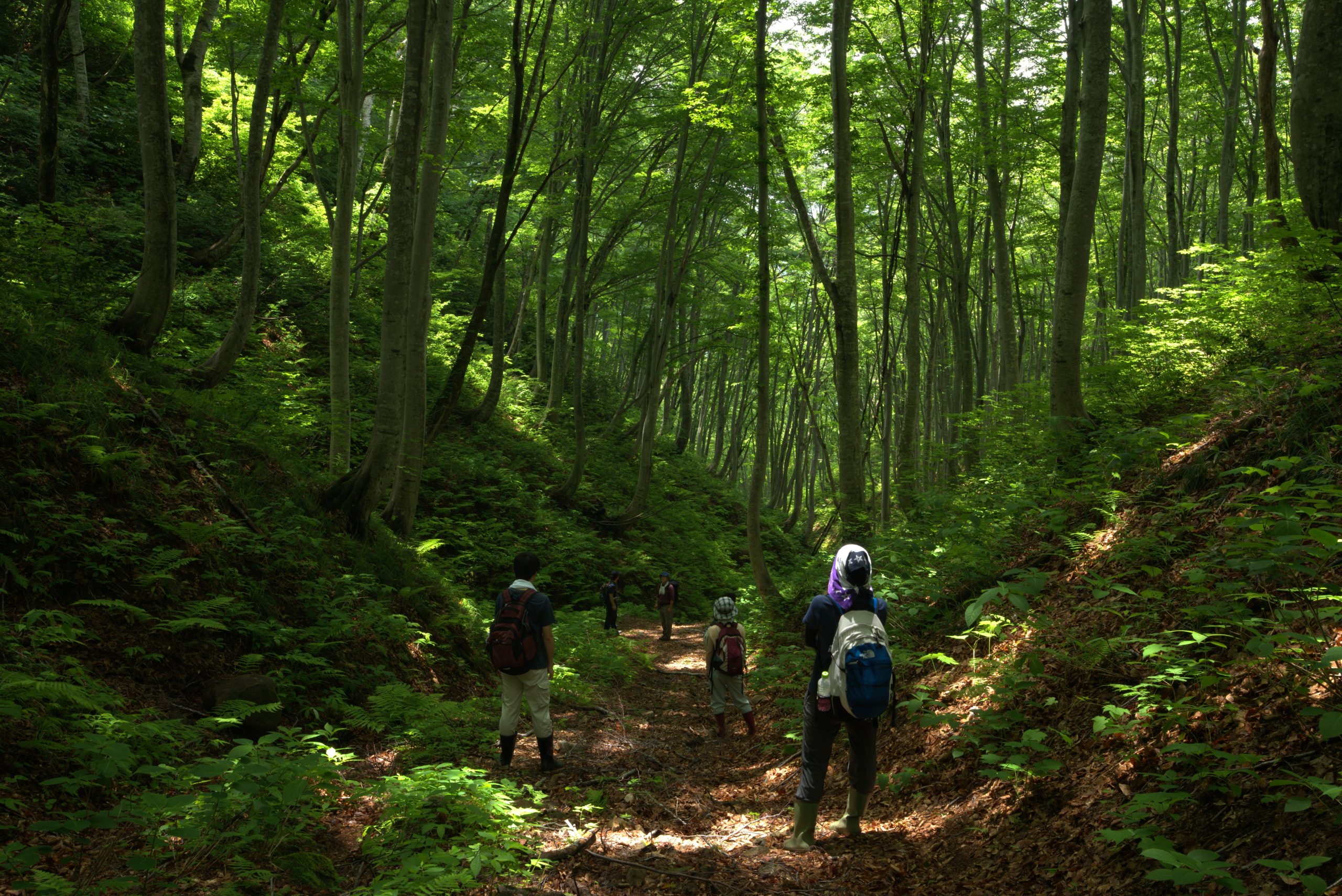
●Trek through the beautiful beech forest surrounding the Oami mountain pass
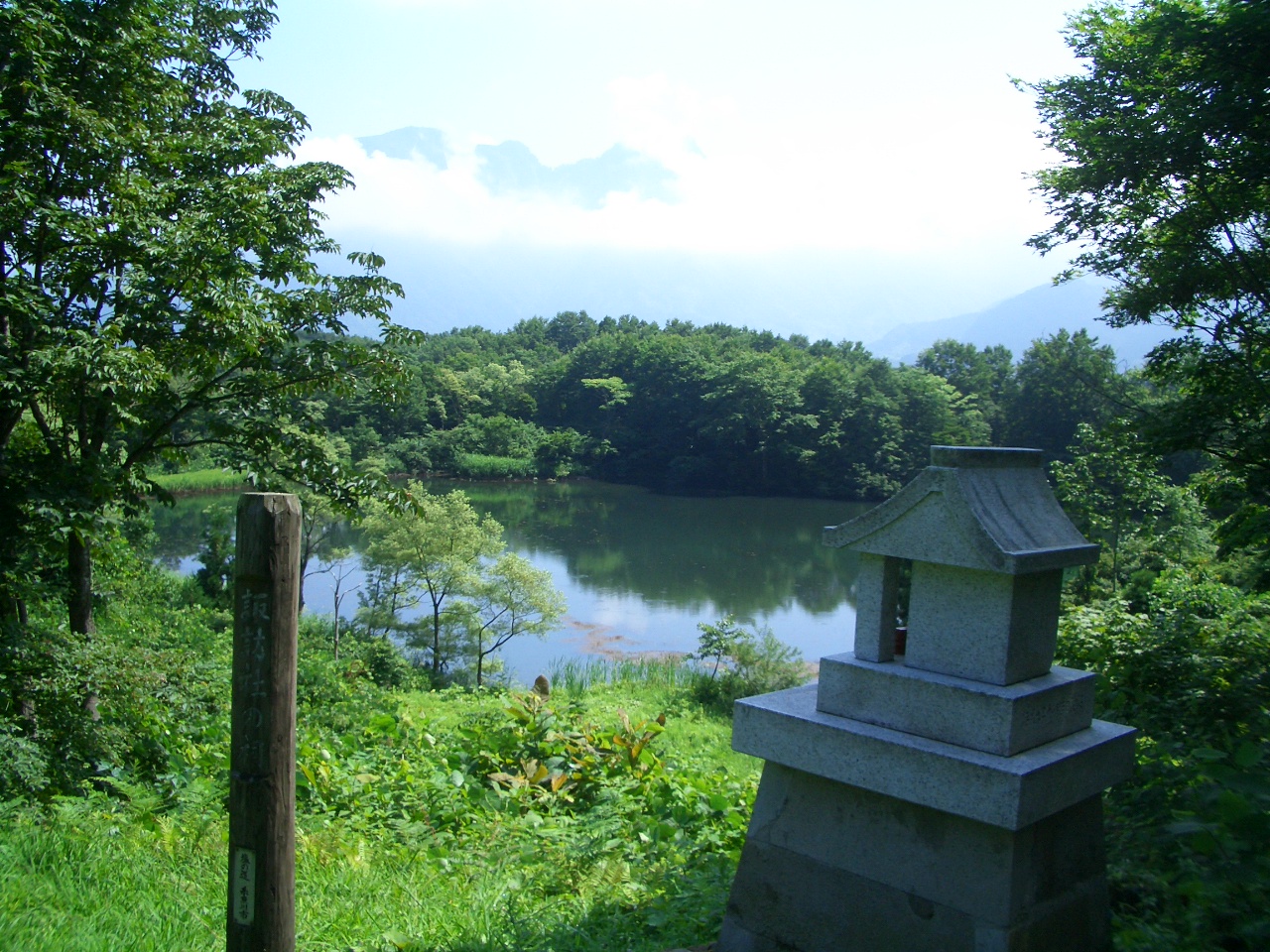
●Spy the emerald green waters of the Kakuma-ike and Shiro-ike ponds
●Browse the period photos and antique items on display at the Yamaguchi Salt Road Museum
The Oami Toge-goe Course is Otari’s showcase route and the one that people list time and time again as their favorite. Unlike other sections of the more contemporary Chikuni Kaido, this one is comparatively isolated, rugged, and harder to access, but worth the time and hassle if you can handle challenging climbs and technical trails. The sleepy settlement of Oami, once a bustling hub of activity, is lovely in its own right, but the real draw is the nature. This course takes you on beautiful trails past waterfalls, through pristine beech forests, and along the edge of crystal-clear ponds before concluding with sweeping views of the Sea of Japan and the surrounding mountains. Here, more than anywhere else, you feel as if you’re stepping into a Salt Road time capsule.
Elevation Profile
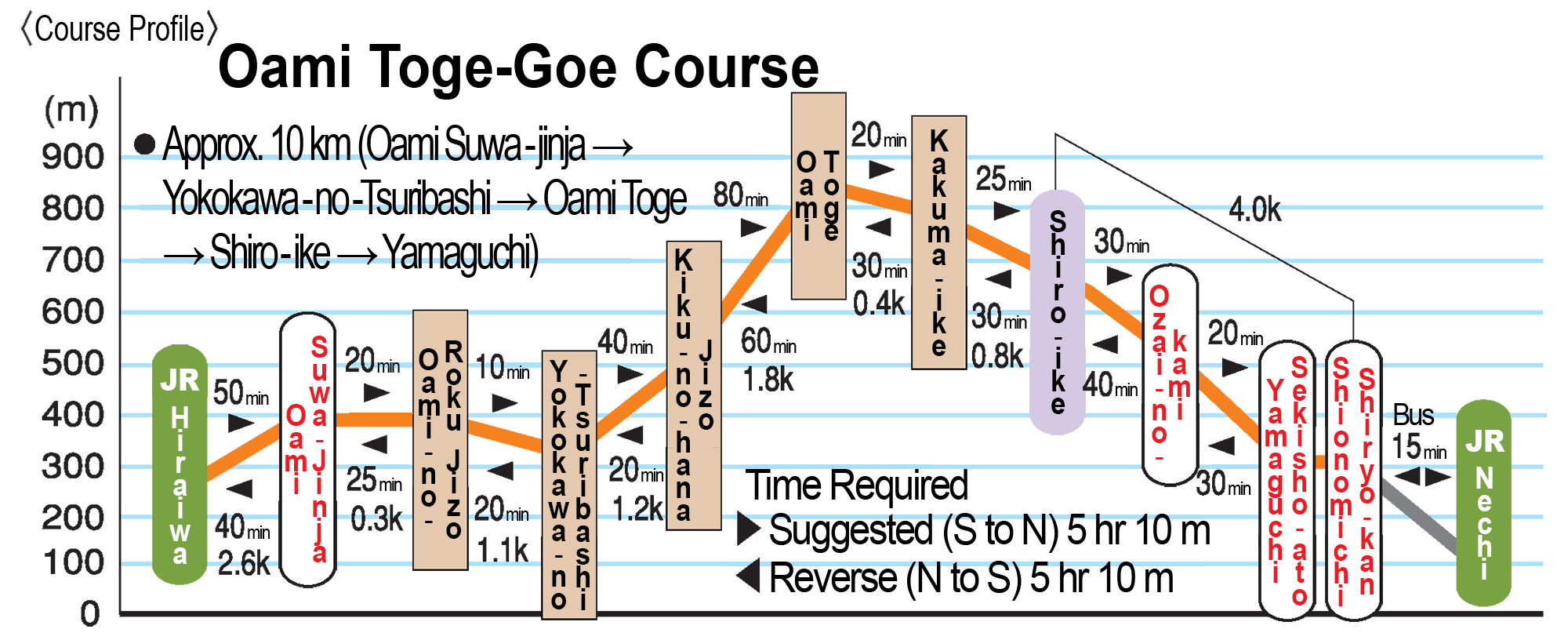
*This course travels on steep terrain through a remote area, so please pack and plan accordingly, and be sure to give yourself ample time to finish the walk.
Access
By Car
Parking is available at the southern end of the course using the parking lot for the Hiraiwa Ideyu-no-Hiroba, while the Fossa Magna Park parking lot can be used at the northern end.
For further inquiries, please contact the Itoigawa City Hall at +81 (0)25-552-1511.
By Train
Hiraiwa Station ← 10 min walk → Himekawa-no-Hyochu (Marker) ← Shionomichi (Salt Road) → Oami Suwa-jinja ← Shionomichi (Salt Road) → Oami Toge ← Shionomichi (Salt Road) → Shionomichi Shiryo-kan / Yamaguchi Sekisyo-ato ← 10 min by bus → Nechi Shindo Bus Stop ← 5 min walk → Nechi Station
Taxi: about 10 min between Hiraiwa Station and Nechi station.Please confirm the fare when arranging a taxi.
Otari Kanko Taxi
Tel: 0261-82-2045
Historical Landmarks & Points of Interest
-
Oami-juku
The Oami settlement was once a critical stop on the Salt Road. As the first settlement along the route located on the Shinshu (Nagano) side of the pass, it featured accommodations for porters and oxen handlers, served as a busy cargo relay station, and harbored a checkpoint for the inspection of goods and collection of taxes.
-
Oami-no-Roku Jizo
-
Yokokawa-no-Tsuribashi
-
Oami Toge
This 840m mountain pass was one of the most dangerous and demanding obstacles for the men, women, and animals that walked the Shionomichi. As such, there were several teahouses and inns below the pass to serve travelers passing through this unforgiving section.
-
Kakuma-no-Dohyo
This original trail marker is inscribed with “Right, Matsumoto Kaido Oami / Left, Nakaya-do Yokokawa.”
-
Shiro-ike
-
Bokka Yado-ato
A former porter lodge once stood here. However, a massive avalanche in 1824 crushed the building, causing the deaths of 21 people who were staying at the inn. A Jizo statue built in memory of the deceased used to be located here has since been moved to the Yamaguchi area.
-
Ippon-sugi / Ozai-no-Kami
A statue of a Sai-no-Kami border god is enshrined here at the base of a large cedar tree. This beautiful grassy outlook with views of the Nechi Valley and surrounding mountains is a wonderful rest spot on the final approach to Yamaguchi.
-
Yamaguchi Sekisho-ato
This was once an important location along the Chikuni Kaido that was the site of the Echigo (Niigata) side’s official Salt Road checkpoint. Today, only an unassuming monument marking the site remains.